The Moon has fascinated humans for thousands of years. As it travels around Earth, its appearance changes night after night, creating what we call Moon Phases. These phases occur because different portions of the Moon’s sunlit side become visible from Earth during its orbit.
Understanding moon phases helps us learn about astronomy, tides, calendars, and even cultural traditions. Whether you are a student, stargazer, or space enthusiast, knowing how the lunar cycle works can deepen your appreciation of the night sky. This guide explains the different moon phases, why they occur, and their significance in science and daily life.
What Is Moon Phases?
Moon phases are the different shapes of the Moon that we see from Earth over the course of a month. The Moon does not produce its own light; instead, it reflects sunlight. As the Moon orbits Earth, the angle between the Sun, Earth, and Moon changes. This causes different portions of the Moon’s illuminated surface to become visible.
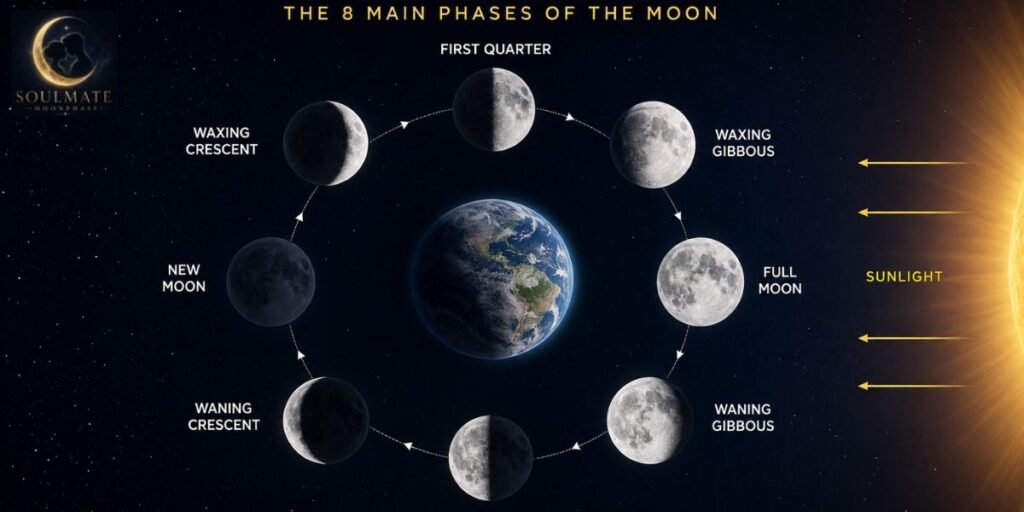
The complete lunar cycle takes about 29.5 days. During this period, the Moon transitions through eight primary phases. Each phase has a unique appearance and plays an important role in understanding celestial movements. Observing moon phases is one of the easiest ways to explore astronomy without special equipment.
Why Do Moon Phases Occur?
Moon phases occur because the Moon revolves around Earth while sunlight continuously illuminates half of the Moon’s surface. Depending on the Moon’s position in its orbit, we see varying amounts of the illuminated side.
When the Moon is between Earth and the Sun, the illuminated side faces away from us, creating a New Moon. When Earth is between the Sun and Moon, the illuminated side faces us completely, resulting in a Full Moon. The gradual changes between these positions create the other moon phases we observe throughout the month.
The Lunar Cycle Explained
The lunar cycle refers to the complete sequence of moon phases from one New Moon to the next. This cycle lasts approximately 29.5 days and repeats continuously. Ancient civilizations used the lunar cycle to create calendars and track seasonal events.
The cycle begins with the New Moon and progresses through waxing phases, reaches the Full Moon, and then moves through waning phases before returning to the New Moon. Understanding this cycle helps astronomers predict celestial events and assists skywatchers in planning observations.
List Of 8 Moon Phases With Their Personality Traits
- New Moon Phase
- Waxing Crescent Phase
- First Quarter Moon Phase
- Waxing Gibbous Phase
- Full Moon Phase
- Waning Gibbous Phase
- Last Quarter Moon Phase
- Waning Crescent Phase
New Moon Phase: The Bold Initiator (Days 1–3.5)
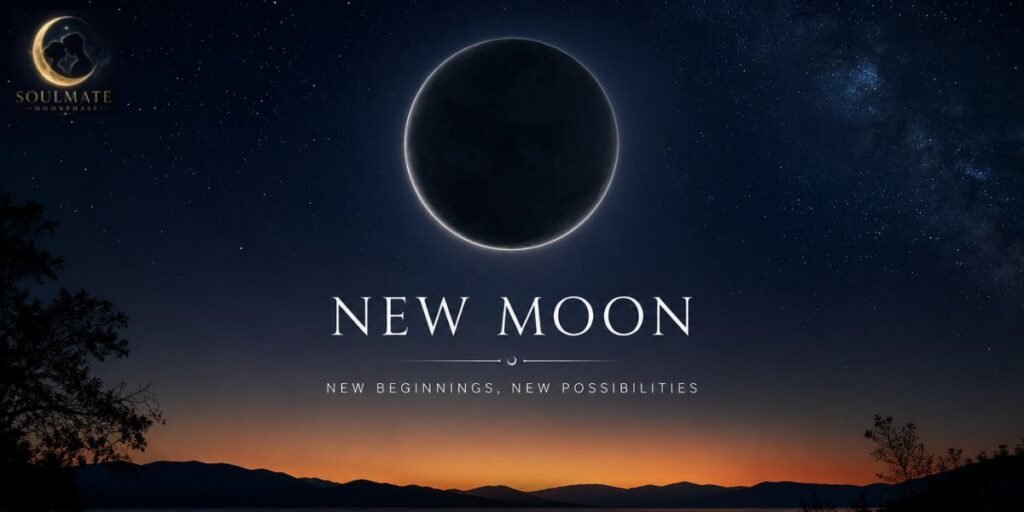
The New Moon marks the beginning of the lunar cycle. During this phase, the Moon is positioned between Earth and the Sun. The side facing Earth receives little or no sunlight, making the Moon nearly invisible in the night sky.
Although difficult to see, the New Moon is significant because it represents a fresh start in the lunar calendar. People born under a New Moon are often visionaries who thrive on new beginnings. They possess a strong sense of curiosity and are naturally drawn toward fresh opportunities and personal growth.
These individuals tend to be independent thinkers who enjoy exploring new ideas. In relationships, they seek partners who encourage their ambitions and support their dreams. Their soulmate is often someone adventurous, optimistic, and open-minded.
Soulmate Compatibility
- Emotional Strength: Hope and determination
- Best Match: Waxing Crescent and Full Moon
- Relationship Style: Growth-oriented and inspiring
Waxing Crescent Phase: The Determined Dreamer (Days 3.5–7)
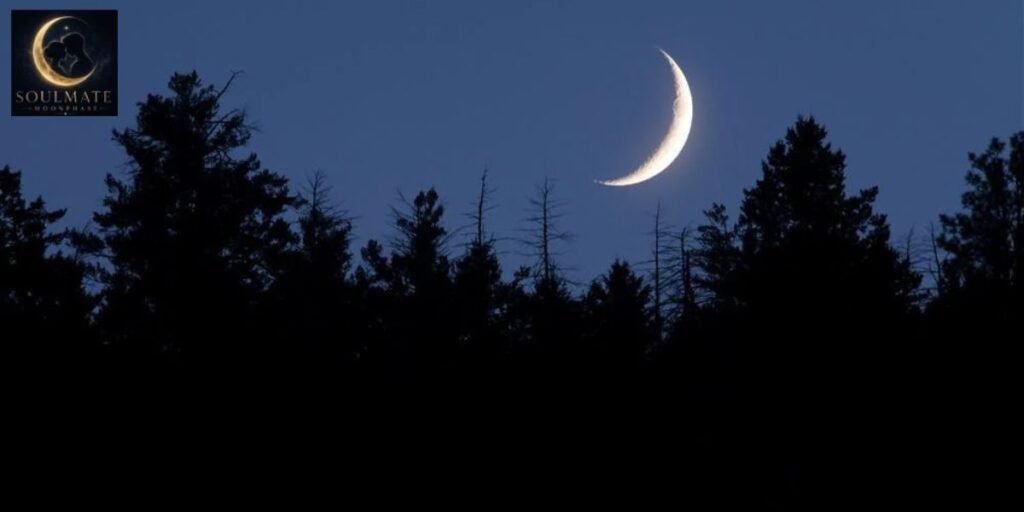
After the New Moon, a small illuminated portion becomes visible. This phase is called the Waxing Crescent. The term “waxing” means that the illuminated portion grows larger each night.
This phase symbolizes growth and progress and is often considered an excellent time for learning and starting new projects. Those born during the Waxing Crescent phase are driven, ambitious, and highly motivated. They enjoy setting goals and working steadily toward success.
Their enthusiasm can be contagious, making them attractive to others. They seek partners who share their passion for progress and self-improvement. These individuals value loyalty and mutual encouragement in relationships.
Soulmate Compatibility
- Emotional Strength: Persistence and optimism
- Best Match: First Quarter Moon
- Relationship Style: Motivating and energetic
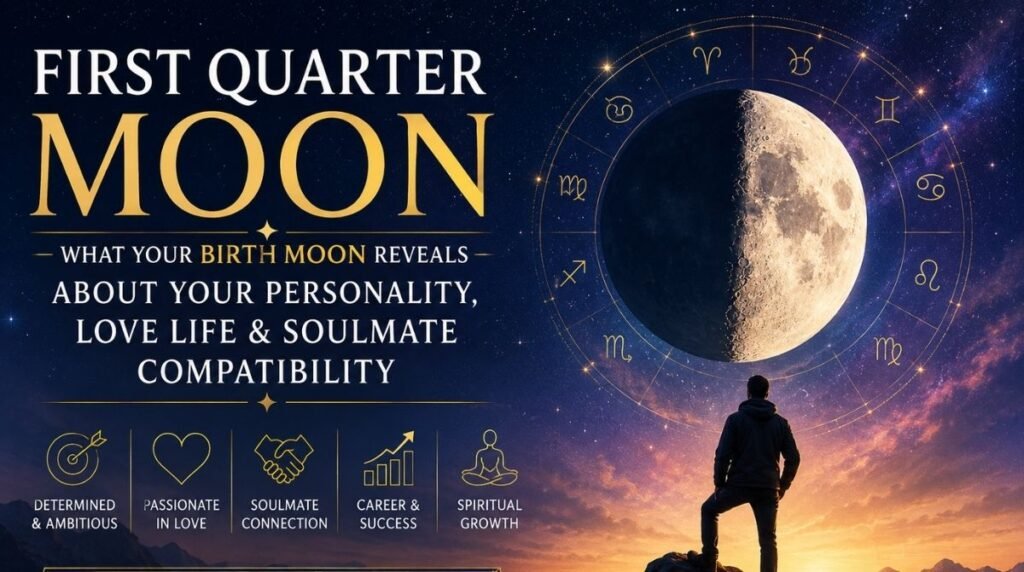
First Quarter Moon Phase: The Fearless Changemaker (Days 7–10.5)
About one week after the New Moon, the Moon reaches the First Quarter phase. Despite its name, only half of the Moon appears illuminated from Earth. This occurs because we are viewing half of the sunlit portion. The First Quarter Moon rises around midday and sets around midnight.
It is easy to identify due to its distinct half-moon appearance. This phase highlights the Moon’s movement around Earth and provides excellent opportunities for lunar observation. First Quarter Moon individuals are natural problem-solvers. They thrive on challenges and possess remarkable determination when facing obstacles.
Soulmate Compatibility
- Emotional Strength: Courage and resilience
- Best Match: Waxing Crescent and Waxing Gibbous
- Relationship Style: Dynamic and supportive
Waxing Gibbous Phase: The Passionate Perfectionist (Days 10.5–14)
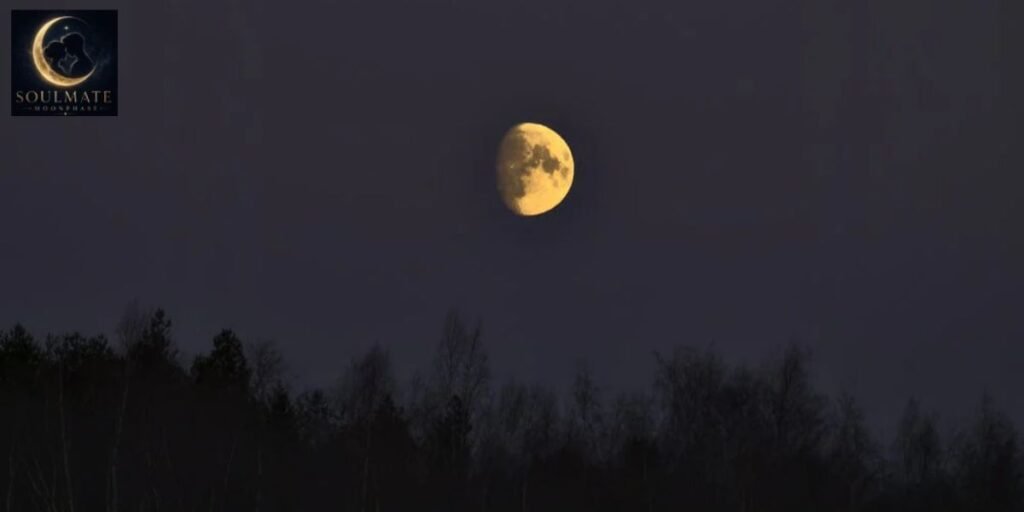
The Waxing Gibbous phase occurs between the First Quarter and Full Moon. During this stage, more than half of the Moon’s surface is illuminated, but it is not yet full. The illuminated area continues to increase each night. The Waxing Gibbous is often bright enough to light up the landscape after sunset. This phase demonstrates the steady progression toward the Full Moon and is a favorite among photographers and astronomers.
People born under the Waxing Gibbous Moon are thoughtful, analytical, and constantly striving for improvement. They enjoy learning and often become mentors or teachers. Their ideal soulmate is someone who values personal growth and intellectual conversations. These individuals are deeply caring and often put the needs of loved ones before their own.
Soulmate Compatibility
- Emotional Strength: Wisdom and compassion
- Best Match: Full Moon
- Relationship Style: Deep and meaningful
Full Moon Phase: The Magnetic Giver (Days 14–17.5)
The Full Moon occurs when Earth lies approximately between the Sun and the Moon. The entire sunlit side of the Moon faces Earth, making it appear fully illuminated. Full Moons are among the most recognizable celestial events. They have inspired myths, folklore, and celebrations across cultures.
The Full Moon provides maximum brightness in the night sky and is associated with stronger tidal effects due to the alignment of the Sun, Earth, and Moon. These individuals value deep emotional connections and thrive in relationships built on trust and understanding. They are passionate lovers and loyal partners who seek meaningful bonds.
Soulmate Compatibility
- Emotional Strength: Confidence and empathy
- Best Match: New Moon and Waxing Gibbous
- Relationship Style: Passionate and balanced
Waning Gibbous Phase: The Wise Teacher (Days 17.5–21)
Following the Full Moon, the illuminated portion begins to decrease. This phase is known as the Waning Gibbous. The term “waning” means the visible illuminated area is shrinking. Although the Moon still appears mostly lit, careful observation reveals a gradual reduction in brightness. The Waning Gibbous rises later in the evening and remains visible through much of the night and early morning.
Born teachers and healers, Waning Gibbous individuals love sharing knowledge and helping others. They are generous, wise, and emotionally mature. They seek partners who appreciate their nurturing nature and share their desire to make a positive impact on the world.
Soulmate Compatibility
- Emotional Strength: Understanding and generosity
- Best Match: Last Quarter Moon
- Relationship Style: Caring and stable
Last Quarter Moon Phase: The Fearless Transformer (Days 21–24.5)
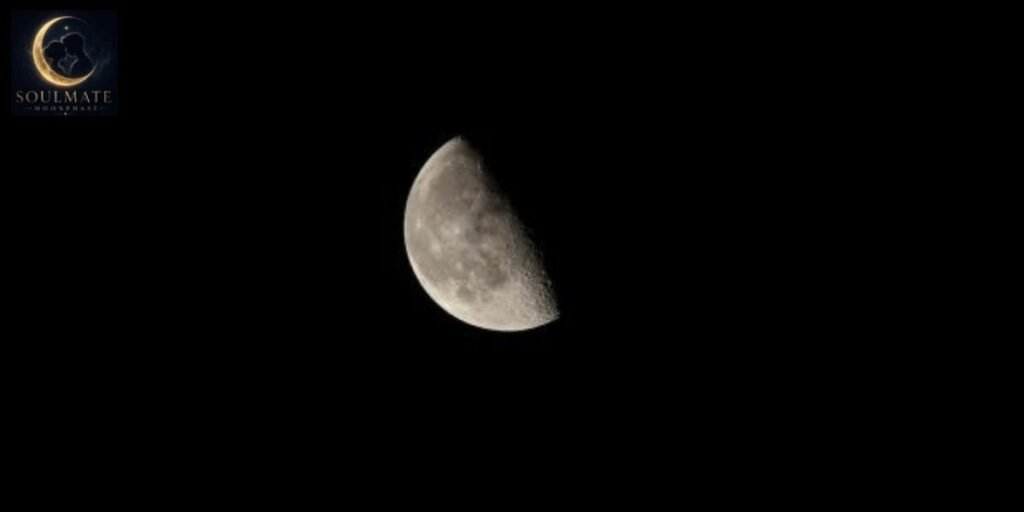
Approximately three weeks into the lunar cycle, the Moon reaches the Last Quarter phase. Like the First Quarter, half of the Moon appears illuminated, but the opposite side is visible. The Last Quarter Moon rises around midnight and sets around midday. This phase is often associated with reflection, evaluation, and completion.
Astronomers use it to study lunar surface features that become visible due to changing shadows. Last Quarter Moon people are reflective, independent, and highly adaptable. They often challenge conventional thinking and seek deeper meaning in life. They value authenticity in relationships and prefer partners who respect their need for personal freedom and growth.
Soulmate Compatibility
- Emotional Strength: Self-awareness and adaptability
- Best Match: Waning Crescent Moon
- Relationship Style: Honest and transformative
Waning Crescent Phase: The Soulful Mystic (Days 24.5–29.5)
The Waning Crescent is the final phase before the New Moon. Only a thin illuminated crescent remains visible, typically seen before sunrise in the eastern sky. As the Moon approaches the end of its cycle, the illuminated portion becomes increasingly smaller. This phase symbolizes closure and preparation for a new cycle. After the Waning Crescent, the Moon returns to the New Moon phase, and the cycle begins again.
Those born under the Waning Crescent Moon are intuitive, spiritual, and compassionate. They often possess strong empathy and natural healing abilities. These individuals crave emotional depth and meaningful connections. Their soulmate is usually someone who appreciates their sensitive and caring nature.
Soulmate Compatibility
- Emotional Strength: Intuition and compassion
- Best Match: Last Quarter Moon
- Relationship Style: Deeply emotional and nurturing
Moon Phases and Ocean Tides
The Moon plays a major role in creating ocean tides. Its gravitational pull affects Earth’s oceans, causing water levels to rise and fall. During New Moon and Full Moon phases, the Sun and Moon align, creating stronger tides known as spring tides.
During the First Quarter and Last Quarter phases, the gravitational forces of the Sun and Moon partially cancel each other out, resulting in weaker tides called neap tides. Understanding moon phases helps scientists predict tidal patterns accurately.
Moon Phases in Culture and History
Throughout history, moon phases have influenced calendars, agriculture, religion, and navigation. Ancient civilizations carefully observed the Moon to determine planting seasons and important ceremonial dates.
Many festivals around the world are linked to specific lunar phases. Lunar calendars continue to play a role in cultural and religious practices today. The Moon remains a symbol of mystery, beauty, and the passage of time across many societies.
Importance of Studying Moon Phases
Studying moon phases helps us understand the relationship between Earth, the Moon, and the Sun. It improves knowledge of orbital mechanics and celestial movements. Moon phases also influence wildlife behavior, tides, and nighttime visibility.
For students, learning about moon phases provides an excellent introduction to astronomy. For scientists, lunar observations contribute to research about planetary systems and space exploration. Understanding the Moon helps us better understand our place in the universe.
Final Words
Moon Phases are a fascinating result of the Moon’s orbit around Earth and the reflection of sunlight. From the invisible New Moon to the brilliant Full Moon and back again, each phase offers a unique glimpse into the mechanics of our solar system.
These phases have guided human activities, inspired cultures, and shaped scientific understanding for centuries. By learning about the lunar cycle, we gain a deeper appreciation for one of the most beautiful and familiar objects in the night sky.
FAQs
Why The Moon Has Phases?
The Moon has phases because it revolves around Earth. As its position changes, we see varying amounts of the sunlit side of the Moon, creating different phases.
What Is Waxing Crescent?
A Waxing Crescent is the Moon phase that occurs just after the New Moon and before the First Quarter Moon. During this phase, a small curved portion of the Moon becomes visible and appears to grow larger each night.
What Causes Moon Phases?
Moon phases are caused by the Moon orbiting Earth. As the Moon moves, we see different portions of its sunlit side, creating the various phases.
Why Does The Moon Change Phases?
The Moon changes phases because its position relative to Earth and the Sun changes throughout its orbit, altering how much of the illuminated side is visible.